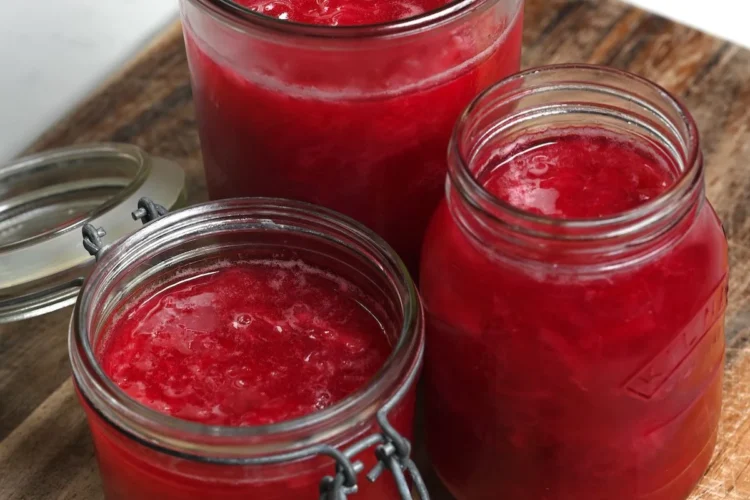
If you’ve never made homemade Strawberry Rhubarb Jam before, you’re in for a real treat. This simple recipe combines juicy strawberries, tart rhubarb, fresh lemon juice, and sugar to create a beautifully balanced jam without using any added pectin.
Jump to Recipe Print RecipeEvery spoonful is sweet, tangy, and bursting with fresh fruit flavor, making it perfect for spreading on warm toast, swirling into yogurt, or topping your favorite desserts.
One of the best things about this recipe is how naturally the fruit thickens as it cooks. With a little patience, you’ll end up with a rich, glossy jam that tastes far better than anything you can buy at the grocery store. Whether you refrigerate it for immediate use, freeze it for later, or preserve it with water bath canning, this homemade jam is a wonderful way to enjoy the flavors of strawberry and rhubarb long after the season ends.
Why This Recipe Works
This recipe keeps things simple by using only four basic ingredients while still creating a flavorful homemade jam with a perfect consistency. There’s no need for commercial pectin because the fruit, sugar, and lemon juice work together to naturally thicken the mixture as it cooks.
Strawberries add natural sweetness and bright berry flavor, while rhubarb contributes a pleasant tartness that prevents the jam from becoming overly sweet. The result is a smooth, well-balanced spread that’s delicious with both breakfast and dessert.
Another advantage is its versatility. You can enjoy it fresh from the refrigerator, freeze it for several months, or preserve it in sterilized jars for long-term storage.
How to Make Strawberry Rhubarb Jam
Begin by washing the rhubarb thoroughly, trimming away the leaves, and cutting the stalks into small, even pieces. Wash the strawberries, remove the stems, and slice any large berries into smaller chunks so they cook evenly.
Place the prepared strawberries, rhubarb, sugar, and freshly squeezed lemon juice into a large saucepan or heavy-bottomed pot. Stir everything together until the fruit is evenly coated with sugar.
Set the pan over medium heat and stir occasionally as the fruit begins releasing its juices. Once the mixture reaches a gentle boil, reduce the heat to low and allow it to simmer slowly.
Continue stirring every few minutes to prevent sticking while the fruit softens and breaks down naturally. As the liquid slowly evaporates, the jam will gradually become thicker and glossier.
Depending on the moisture content of your fruit, this usually takes about one hour. For the best consistency, the jam should reach approximately 220°F (104°C).
Once thickened, carefully spoon the hot jam into clean mason jars. Allow the jars to cool before refrigerating, freezing, or processing them in a water bath canner for long-term storage.
Recipe Tips: Quick Strawberry Rhubarb Jam
The quality of your finished jam depends heavily on the quality of your fruit. Choose ripe, fragrant strawberries and firm rhubarb stalks with vibrant color whenever possible.
If your strawberries are naturally tart, you may want to add a little extra sugar to balance the flavor. On the other hand, very sweet strawberries may require no additional sugar beyond what’s listed in the recipe.
Freshly squeezed lemon juice is always recommended because it provides brighter flavor while helping the jam set properly. Bottled lemon juice can also be used if needed.
Stir the jam regularly during cooking to prevent scorching, especially as it begins to thicken near the end of the cooking time.
Why Add Rhubarb to Strawberry Jam?
Using rhubarb alongside strawberries creates a much more balanced flavor than strawberries alone. Rhubarb’s natural tartness complements the sweetness of ripe berries, creating a jam that’s bright, fresh, and never overly sugary.
Another advantage is affordability. Rhubarb is often less expensive than strawberries, making it an economical way to prepare a generous batch of homemade jam.
Because this recipe doesn’t rely on added pectin, sugar plays an important role in helping the jam thicken. Since strawberries are already naturally sweet, using rhubarb helps balance the additional sugar without making the finished jam taste overly sweet.
The combination produces a rich homemade preserve with excellent texture and a perfect balance of sweetness and acidity.
How Much Jam Does This Recipe Make?
This recipe produces approximately four cups of homemade Strawberry Rhubarb Jam, depending on how long it cooks and how much moisture evaporates.
That’s enough to fill several small mason jars for preserving or to keep plenty on hand for breakfasts, desserts, and homemade gifts.
If you aren’t planning to can the jam, simply store it in sealed containers in the refrigerator where it will stay fresh for up to two weeks.
Can You Use Frozen Strawberries?
Yes. Frozen strawberries work just as well as fresh strawberries because the fruit cooks down completely during the jam-making process.
Although fresh, seasonal strawberries provide wonderful flavor, frozen berries are an excellent choice when fresh fruit isn’t available.
Frozen rhubarb can also be used if you’ve stored some from the growing season. Many people freeze chopped rhubarb during spring so they can make homemade jam throughout the year.
Why Lemon Juice Is Important
Lemon juice does much more than add fresh citrus flavor.
Its natural acidity helps the fruit’s pectin form a proper gel as the jam cooks. Without enough acid, the natural pectin found in strawberries and rhubarb cannot bond together efficiently, resulting in a thinner consistency.
Adding lemon juice lowers the pH of the mixture, allowing the pectin to create the thick, spreadable texture everyone expects from homemade jam.
Along with improving texture, the lemon also brightens the fruit flavors and helps create a fresher tasting preserve.
More Strawberry Rhubarb Recipes
If you enjoy the classic combination of strawberries and rhubarb, there are plenty of other delicious ways to use these seasonal favorites. Try refreshing Strawberry Rhubarb Lemonade, classic Strawberry Rhubarb Pie, soft Strawberry Rhubarb Streusel Muffins, warm Strawberry Rhubarb Crisp, or an easy Strawberry Rhubarb Cobbler. Each recipe highlights the perfect balance of sweet strawberries and tart rhubarb while making the most of this wonderful seasonal pairing.
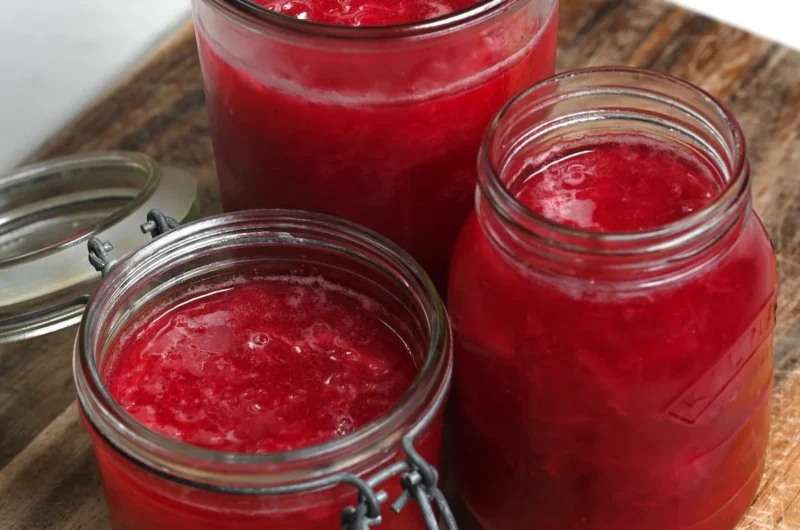
Quick Strawberry Rhubarb Jam
Course: DessertCuisine: AmericanDifficulty: Easy32
servings15
minutes1
hour61
kcalHomemade Strawberry Rhubarb Jam is bursting with the sweet flavor of ripe strawberries and the tangy taste of fresh rhubarb. Made with just four simple ingredients and no added pectin, this easy jam thickens naturally as it cooks.
Ingredients
5 cups rhubarb, cut into ½-inch pieces
2 cups strawberries, hulled and halved
2¼ cups granulated sugar
1 tablespoon fresh lemon juice
Directions
- Add the rhubarb, strawberries, sugar, and lemon juice to a large saucepan and stir to combine.
- Place the saucepan over medium heat and cook until the mixture begins to bubble.
- Reduce the heat to medium-low and maintain a gentle simmer, stirring occasionally to prevent sticking.
- Continue cooking for about 1 hour, or until the jam thickens and reaches approximately 220°F (104°C).
- Remove the saucepan from the heat and carefully skim off any foam from the surface if desired.
- Spoon the hot jam into clean glass jars, leaving about ¼ inch of headspace at the top.
- Seal the jars and refrigerate after cooling, or process them using the water bath canning method for long-term storage.
Notes
- This recipe makes about 4 cups of jam.
- For refrigerator jam, store in airtight jars for up to 2 weeks.
- Freeze for up to 6 months, leaving extra space in the jars for expansion.
- For shelf-stable storage, process filled jars in a boiling water bath for 10 minutes and store sealed jars in a cool, dark place for up to 1 year.
Nutrition Facts
31 servings per container
- Amount Per ServingCalories61
- % Daily Value *
- Total Carbohydrate
15g
6%
- Total Sugars 14g
- Calcium 18mg 2%
- Iron 0.1mg 1%
- Potassium 68mg 2%
- Vitamin A 20mcg 3%
- Vitamin C 7mg 8%
* The % Daily Value tells you how much a nutrient in a serving of food contributes to a daily diet. 2,000 calories a day is used for general nutrition advice.
